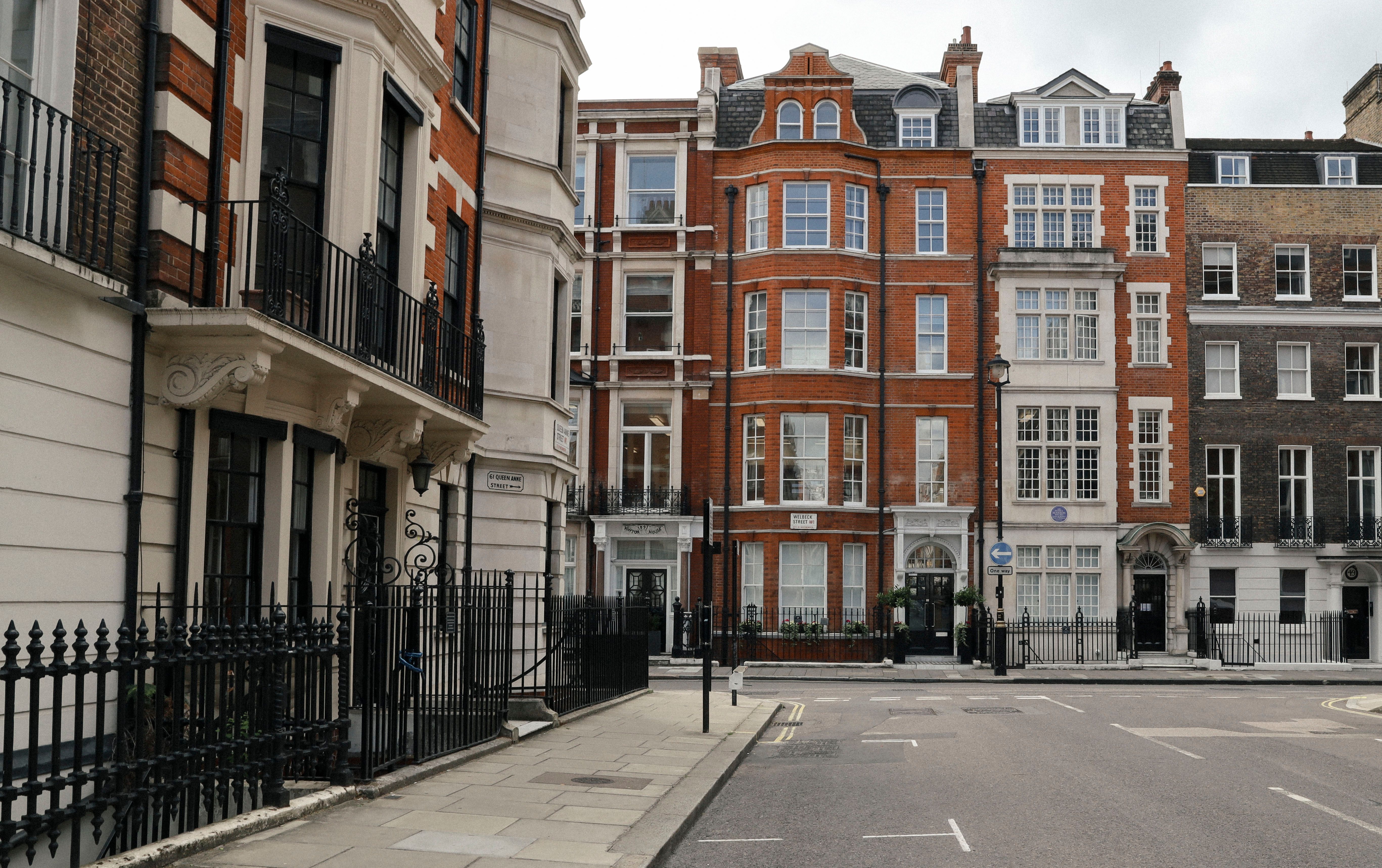
London's prime property market is becoming increasingly selective, with buyer demand varying significantly by location, price bracket and property quality. While overall demand for homes priced between £2 million and £10 million softened during Q3 2026, several Prime Central London locations recorded stronger activity, alongside a modest improvement in the super-prime market.
For buyers and sellers, the message is clear: the prime London property market is not moving in one uniform direction. Understanding local demand, realistic pricing and the qualities buyers value most is increasingly important.
What is happening in the prime London property market?
According to the latest figures cited in this analysis, demand for London homes priced between £2 million and £10 million fell by 1.3% in Q3 2026 compared with the previous quarter. However, this overall decline masks differences between individual neighbourhoods and price brackets.
Mayfair, Knightsbridge, Marylebone and Pimlico recorded increases in buyer activity, while demand in the £10 million-plus super-prime segment also strengthened slightly.
These figures suggest a market in which buyers remain active but are becoming more selective about where and what they purchase.
Which prime London areas are attracting buyer demand?
Mayfair, Knightsbridge and other central locations
Several established central London markets recorded stronger buyer activity despite the wider quarterly slowdown.
Mayfair saw increased demand across prime and super-prime properties, while Knightsbridge also experienced improved activity. Notting Hill, Belgravia and Kensington recorded stronger momentum in the £10 million-plus segment.
International buyers continue to play an important role in these markets. Their decisions can be influenced by currency movements, taxation, political stability, lifestyle considerations and the relative value of London property compared with other global cities.
For sellers, this reinforces the importance of understanding the specific audience for their property rather than relying solely on broad market trends.
Family markets remain resilient
Demand across the £2 million-to-£10 million segment was particularly strong in established family-house markets, including Clapham and Wandsworth, followed by areas such as Islington, Richmond, Putney and Wimbledon.
These locations appeal to buyers looking for larger homes, outside space, access to schools and long-term stability. Family moves are often driven by practical needs, meaning that some buyers will continue searching even when wider market sentiment is subdued.
The contrast between these markets and some traditionally prestigious central districts highlights why location-specific analysis is essential when buying or selling a prime London property.
Why are some London property markets outperforming others?
In a selective market, buyers focus increasingly on the individual property rather than the postcode alone.
Well-presented homes in desirable streets can still attract substantial interest, particularly when they are priced in line with current market conditions. Conversely, properties with compromised layouts, dated interiors, weaker locations or unrealistic asking prices may struggle to generate enquiries.
Condition is also an important consideration. Many buyers value turnkey properties because refurbishment can involve significant costs, planning requirements and lengthy timescales. Where substantial work is needed, purchasers are likely to assess whether the asking price reflects the investment and risk involved.
This means that two apparently similar homes in the same neighbourhood can achieve very different results.
For sellers, understanding comparable properties, competing stock and the likely buyer profile is essential when deciding how to position a property.
What does the current market mean for sellers?
For sellers in Prime London, the most effective strategy begins with a realistic understanding of their property's position in the current market.
An ambitious asking price can restrict early interest and reduce the opportunity to generate competitive offers. The initial marketing period is particularly important because it is when a newly launched property is presented to prospective buyers for the first time.
A successful sales strategy should include:
- Evidence-based pricing: Use relevant comparable properties and current market evidence to establish an appropriate asking price.
- High-quality presentation: Professional photography, film and compelling property descriptions help communicate the property's strongest features.
- Targeted marketing: Identify the most relevant domestic and international buyer audiences.
- Access to qualified buyers: Use established relationships and suitable marketing channels to reach prospective purchasers.
- Regular performance reviews: Assess enquiries, viewing feedback and competing properties, adjusting the strategy where necessary.
- Discreet marketing where appropriate: Consider whether targeted or off-market engagement is suitable for the property and seller's objectives.
The aim is not simply to put a property on the market. It is to position it effectively, reach the right audience and create a compelling reason for qualified buyers to engage.
If you are considering selling, speak to Jefferies London about your property and arrange a property valuation.
What opportunities does the market offer buyers?
Current conditions may create opportunities for buyers, particularly where a property has been on the market for an extended period, requires refurbishment or was initially priced too ambitiously.
However, a softer overall market does not mean every seller is under pressure or that every property will be available at a substantial discount.
Exceptional homes in sought-after locations can still attract strong competition when several buyers recognise their quality and value.
Preparation is therefore essential. Buyers should have a clear understanding of their requirements, establish their budget and financing arrangements, and ensure they are ready to proceed when the right property becomes available.
Understanding the differences between neighbourhoods and property types can also help buyers identify opportunities that align with their priorities.
Explore properties currently available through Jefferies London or speak to our team about your acquisition requirements.
What is the outlook for the prime London property market?
Prime London is likely to remain a varied market in the months ahead. The forthcoming Budget, taxation, borrowing costs and wider geopolitical conditions will continue to influence buyer sentiment.
Nevertheless, London retains several long-term attractions, including its international connectivity, education, culture, financial services and established legal framework, alongside the limited supply of exceptional homes in many desirable locations.
The latest demand figures should therefore be viewed in context. Rather than indicating that the market has stopped moving, they highlight how activity can differ significantly between neighbourhoods, price brackets and individual properties.
For both buyers and sellers, success increasingly depends on understanding these differences and making informed decisions based on current market conditions.
Buying or selling in Prime London?
At Jefferies London, we advise buyers and sellers across the Prime and Super-Prime London property markets. Our approach combines local market knowledge, considered property advice, targeted marketing and relationships with qualified domestic and international clients.
Whether you are preparing to sell, exploring acquisition opportunities or seeking a clearer understanding of your property's position in the current market, our team can help you assess your options.
Contact Jefferies London to discuss your requirements in confidence.
You might also be interested in
For anyone involved in London’s prime property market, the words “mansion tax” have an impressive ability to make buyers nervous and sellers reach for a calculator. From April 2028, the proposed High
Unless, of course, you're buying.
There is a rather strange phenomenon in the property market. When London house prices are rising rapidly, everybody says: “I wish I'd bought five years ago.” When London house prices fall, everybody s