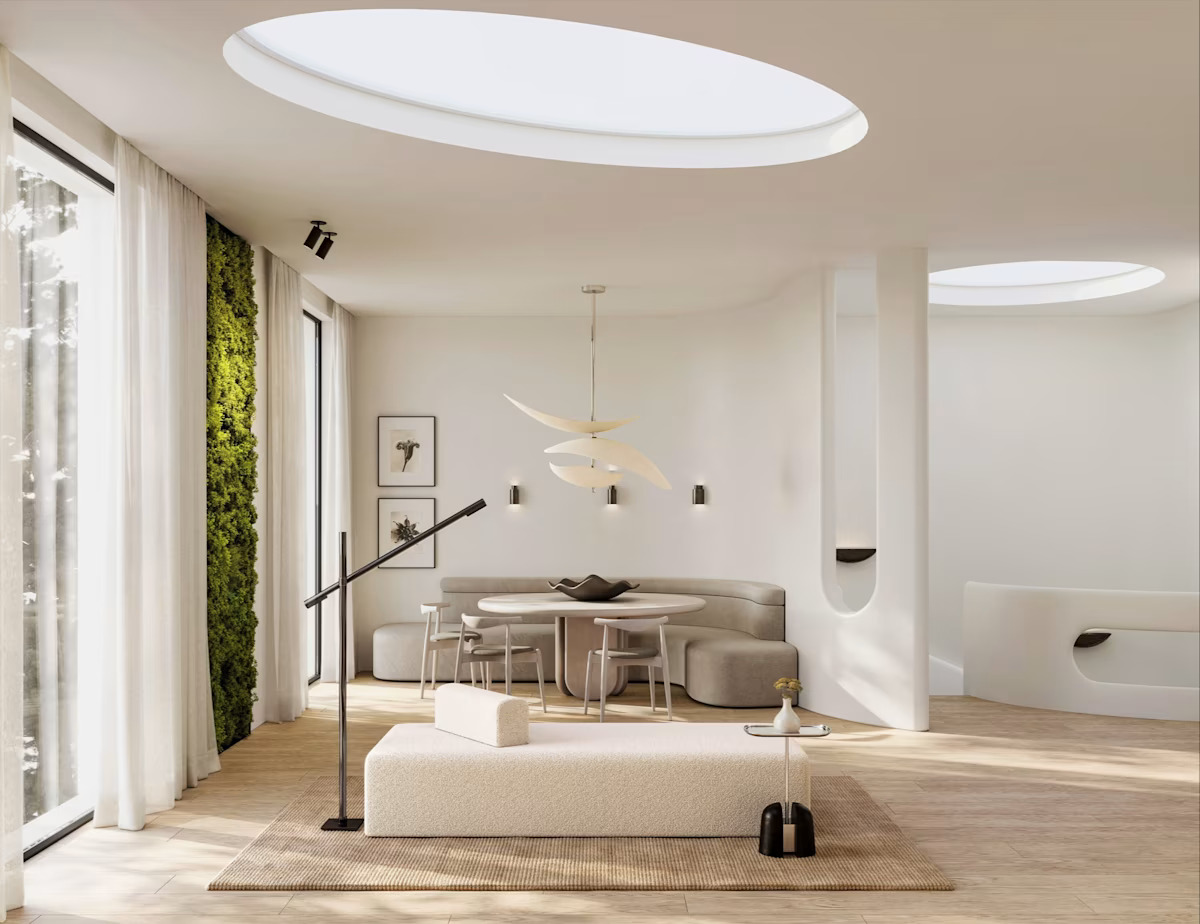
After years working in London, Singapore, and Switzerland, property consultant and medtech investor Kas Bordier kept seeing the same thing: “High achievers burning out.” No great surprise there, but she also became aware that part of the reason they were doing so is that they were “living in homes that were beautiful, but biologically doing them no good”, she says. “It’s increasingly clear how important the external environment is to the human body: whether you’re exposed to toxins, or are using light to enhance or disrupt your circadian rhythm.” Her conclusion? “We have to build [homes] for health, not just for aesthetics.”
There’s growing evidence around “the exposome - the idea that our health is not shaped just by genetics but by the external factors we are exposed to”, says longevity specialist Dr Sabine Donnai. The Environmental Protection Agency estimates that many of us spend up to 90 per cent of our time indoors; because of that, she says, “the home becomes one of the most important environments influencing that exposure”.
Initially in partnership with New York-based health entrepreneur Shouka Amirsolimani, Bordier decided to launch Mavi, a consultancy that helps designers and architects weave longevity science into the fabric of homes. It joins a growing movement at the cross-section of health and residential design, which is also seeing longevity doctors and health consultants “diagnose” the health issues in homes and prescribe strategies to improve their impact on residents. There’s a captive audience. According to the Global Wellness Institute, homes with a wellness focus command premiums of 10 per cent or more at the top end of the market. It forecasts that the wellness real estate market will hit $1.1tn by 2029.
Read the full article here: https://www.ft.com/content/d78d9825-e664-4c07-839e-70d9bcb795e3?shareType=nongift
You might also be interested in

Jul 13, 2026 – Published in Property Industry Eye
Jefferies London has acquired independent estate agency Grange London as it expands its presence in the the capital’s prime lettings market. The deal adds a managed portfolio of more than 100 propert

Apr 30, 2026 – Published in Property Industry Eye
The number of people employed as estate agents and property auctioneers in the UK has declined over the past three quarters, according to analysis from Jefferies. Employment in the sector fell from 6